Events
The Douro in different expressions: a journey through the terroir

There’s a question that comes up almost every time, halfway through a tasting: what sets apart two wines made on the same estate, in the same year, by the same team? The answer is geographic. What separates them is a few hundred meters, a difference in altitude, a different orientation to the sun. In the Douro, that’s enough to produce wines that have little in common.
Across the vineyards of Quinta Vale D. Maria, every plot holds its own identity. A terroir tasting reveals these differences, showing how geology, exposure, and vine age express themselves in each wine.
At Quinta Vale D. Maria, this exercise happens on an unusual scale. The 33.6 hectares of the Rio Torto valley don’t produce a single estate wine, but wines from individual plots — several of which measure less than one hectare. The Vinhas Collection exists to make these differences legible: each wine is bottled separately, so the plot can be read without interference.
The Four Variables That Define a Plot
Before opening any bottle, it’s worth establishing what changes from vineyard to vineyard. There are four factors, and each has a direct sensory translation.
1. Altitude
Altitude regulates the heat accumulated over the growing cycle. Higher vineyards ripen slowly and retain acidity. Valley-floor vineyards concentrate more and gain body.
2. Sun Exposure
A north-facing slope and a south-facing one live through different summers. The first extends ripening and preserves freshness; the second gives structure. When the terrain interferes — a mountain casting shade in the late afternoon, for example — the result stops being predictable.
3. Vine Age
A vine over sixty years old has roots that have broken through the vertical fractures of the schist and descended several meters in search of nutrients. That gives it characteristics young vines don’t have, which come through in the glass as continuity and persistence.
4. Grape Varieties
This is the least visible factor, and perhaps the most decisive. A plot with five varieties behaves differently from one with forty-one. In a field blend, the varieties ripen at different times, and this desynchronization works as a natural balancing mechanism, before any decision is even made in the cellar.
Terroir Through the Glass
Reading terroir doesn’t start from preference, but from difference. The goal isn’t to pick a favorite wine, but to understand what distinguishes each plot.
Taste horizontally. Wines from the same producer and, whenever possible, from the same vintage. With the year fixed, the only variable left is origin. This condition is what gives the whole exercise its meaning.
Use the same glass throughout. Changing the shape introduces a difference that isn’t about the wine.
Control the temperature. Between 16°C and 18°C, Douro reds keep their aromatic definition and the alcohol doesn’t dominate. For old-vine whites, don’t go below 10°C: too much cold alters the complexity you’re trying to read.
Focus on four axes. Acidity, tannin, complexity, and persistence. Four comparable dimensions say more about origin than a long list of aromatic descriptors.
Plot by Plot
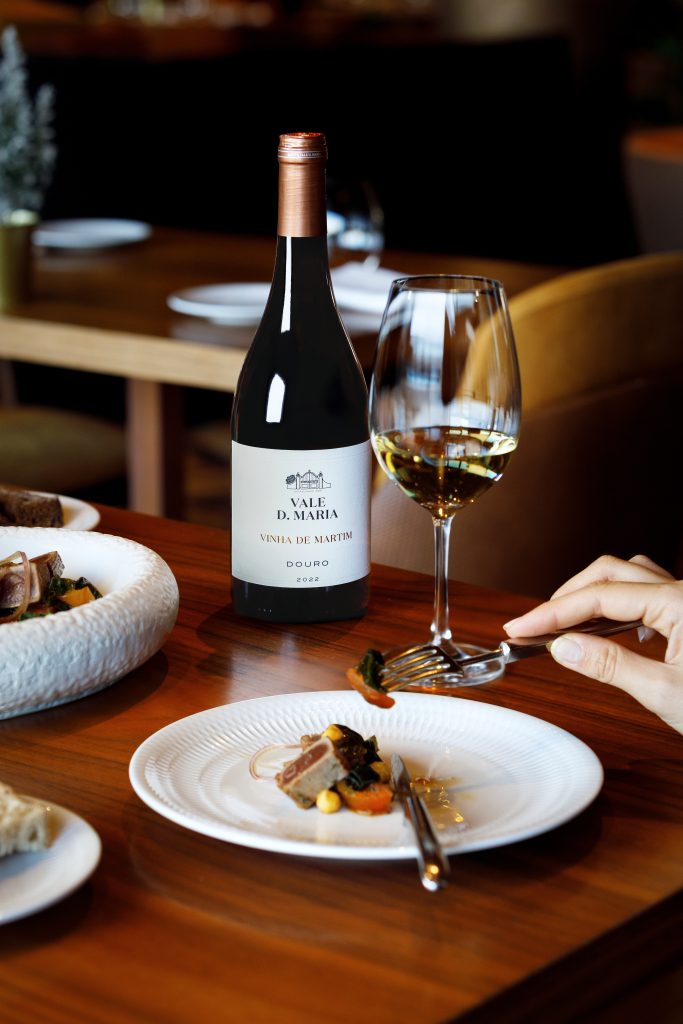
Vinha de Martim: 0.6 hectares, north-facing, 80+ years old
An old white vineyard in the Douro is, in itself, a rarity. Vinha de Martim brings together more than twenty varieties in a field blend, on a high-altitude, north-facing plot.
The variables anticipate the result: north exposure and high altitude extend ripening, translating into freshness and a direct aromatic line. Nine months in French oak barrels and twice-weekly bâtonnage add the volume that balances that verticality. It’s the natural starting point for any Collection tasting.
Vinha do Rio: 0.8 hectares, south-facing, average age 80 years
Vinha do Rio is the oldest and lowest-lying plot on the estate, planted on the bank of the Rio Torto. It brings together 29 varieties, with Tinta Barroca accounting for roughly half.
Its interest lies in how it deviates from the expected. South-facing, it catches the midday sun; in the afternoon, it’s sheltered by the mountain, which returns shade at a decisive stage. This regime of intense heat followed by protection produces a wine with more elegance than the exposure would suggest. In a tasting, it’s the glass where the reading stops being mechanical.
Vinha da Francisca: 4.5 hectares, south and southeast, five varieties
Planted in 2004, Vinha da Francisca is the deliberate exception to the field blend: Tinta Francisca, Touriga Nacional, Touriga Franca, Rufete, and Sousão.
It works as a point of comparison. With only five known varieties, the profile becomes more legible and direct. It’s through this contrast that you notice what the diversity of old vines adds — and the answer is rarely intensity; it’s definition.
Vinha do Moinho: 0.5 hectares, two exposures, seven varieties
Deeper into the Rio Torto valley, away from the estate’s core, Vinha do Moinho is split into two parts: one facing west, and a smaller slope facing south.
It’s bottled only in exceptional years, after 18 months in barrel and seven to ten years of bottle aging. For collectors, it’s the rarest plot in the collection — a vineyard that doesn’t always exist in the form of wine.
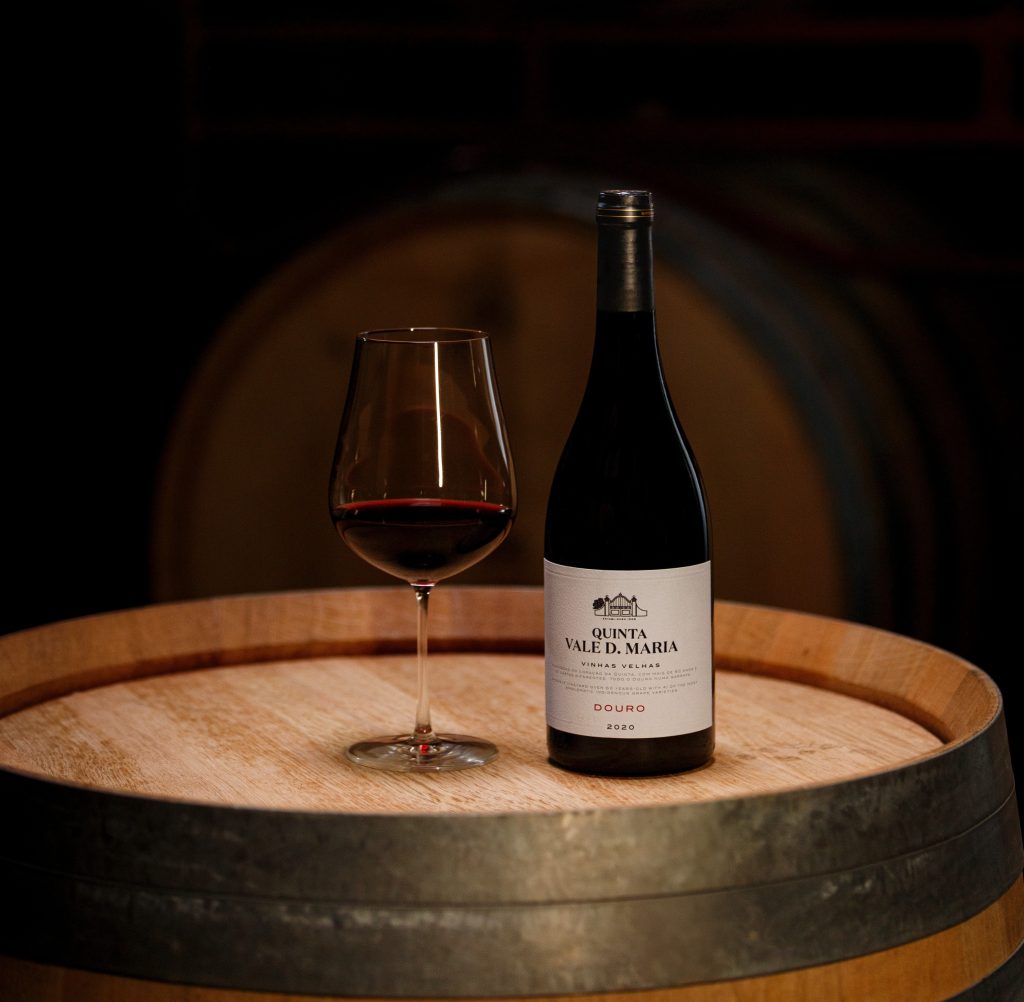
Vinhas Velhas (Old Vines): 15 hectares, 41 varieties, 60+ years old
The 15 hectares of Vinhas Velhas span east, west, south, southeast, and southwest exposures, sheltered from northern winds. Here you’re not tasting a single plot: you’re tasting an entire ensemble working in balance.
41 Varieties: What the Old Vines Hold
It’s worth looking at the composition of these vineyards in some detail. The dominant varieties are Tinta Barroca, Rufete, and Touriga Francesa, complemented by a diverse mix of other varieties in smaller proportions.
This composition comes from the replanting carried out after phylloxera, following traditional Douro practices that preserved varietal diversity rather than standardizing it.
Being the guardian of these old vines means, above all, not replacing them. It means preserving them, recovering forgotten varieties, and accepting low yields as a natural consequence of age. The rarity of these wines is an expression of what nature, time, and territory make possible.
Cima Corgo and Douro Superior
Quinta Vale D. Maria doesn’t end at Cima Corgo. In the Douro Superior, Quinta Vale do Sabor covers 44 hectares beside the Rio Sabor, with vineyards planted between 230 and 320 meters and six varieties chosen to ensure diversity of sun orientation.
Adding the Superior Range wines to a tasting broadens the scope of the exercise: you’re no longer comparing plots within the same estate, but comparing two sub-regions. Cima Corgo, on the Rio Torto, responds with density and depth. Douro Superior brings greater thermal amplitude and a brighter character.
There’s no hierarchy between the two. They are different expressions of the same territory, and knowing both is what allows you to read the Douro at the right scale.
Time, the Missing Variable
All the variables above are fixed. What’s missing is the one that moves: time. And that can only be understood through a vertical tasting — the same plot, different vintages.
The wines of the Vinhas Collection have an aging potential of 5 to 20 years after bottling. Over that period, the fruit recedes, the mineral structure comes forward, and the origin becomes more evident with age. That’s the reason these wines are meant to be cellared — not for speculation, but because the reading isn’t finished yet.
Each bottle in the Vinhas Collection is, in that sense, a plot still in progress. The estate gives the coordinates; the rest happens in the glass, and it takes years.
Quinta Vale D. Maria supports the principles of moderate and responsible consumption.
Related Articles

Terroir
Douro Harvest: How to Pick a Vineyard of 41 Grape Varieties
10 September, 2026

Wine Tourism
Quinta Vale D. Maria: a unique wine tourism experience in the Douro
2 September, 2026

Old Vines
The Douro Vineyards in Summer: The Resilience of the Terroir
22 July, 2026
Wines
How to Use a Wine Decanter: A Guide from Quinta Vale D. Maria
19 June, 2026
Wine Pairings
Portuguese Gastronomy at Easter: Tradition, Terroir and the Art of the Table
2 April, 2026
